Learning Outcomes
After reading this article, you will be able to identify and apply the rules governing fairness to opposing parties and counsel in litigation. You will understand the ethical requirements for evidence preservation, proper treatment of witnesses, and the prohibition of tactics intended to embarrass, delay, or burden others. You will be prepared to answer MPRE questions on these topics with confidence.
MPRE Syllabus
For the MPRE, you are required to understand the ethical obligations that ensure fairness in adversarial proceedings. This article covers the following key syllabus points:
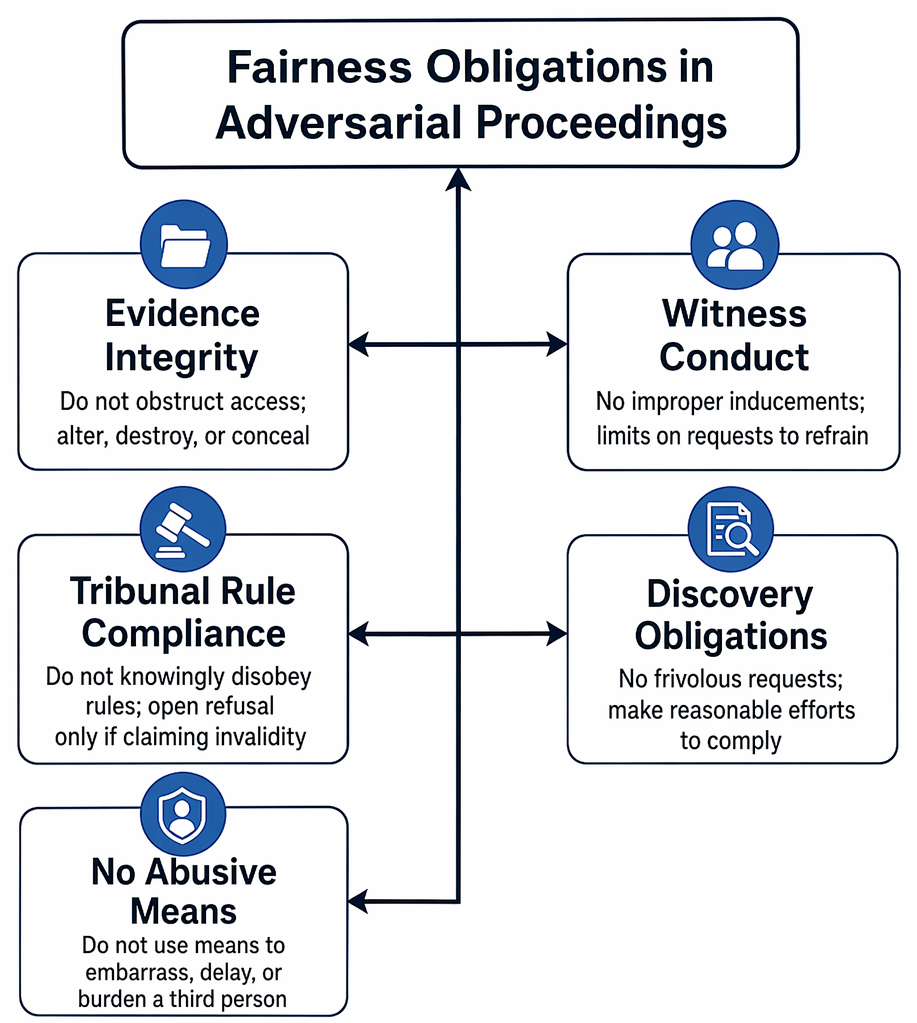
Evidence-handling duties proceed from source identification and preservation measures to discovery production and response to any destruction or concealment.
- Recognize the prohibition against unlawfully obstructing another party’s access to evidence or unlawfully altering, destroying, or concealing material with potential evidentiary value.
- Identify the rules regarding improper inducements to witnesses and the limits on requesting witnesses to refrain from providing relevant information.
- Understand the duty not to knowingly disobey tribunal rules, except for open refusals based on a claim of invalidity.
- Apply the prohibition on frivolous discovery requests and the requirement to make reasonable efforts to comply with proper discovery.
- Recognize the ban on using means that have no substantial purpose other than to embarrass, delay, or burden a third person.
Test Your Knowledge
Attempt these questions before reading this article. If you find some difficult or cannot remember the answers, look more closely at that area during your revision.
-
Which of the following is prohibited under the duty of fairness to opposing party and counsel?
- a) Paying a non-expert witness reasonable travel expenses
- b) Requesting a non-client witness to refrain from voluntarily giving relevant information to another party, unless the witness is a relative or agent of the client and will not be adversely affected
- c) Destroying documents with potential evidentiary value relevant to a pending case
- d) Paying an expert witness a reasonable hourly fee
-
An attorney learns that a warehouse employee witnessed an accident relevant to ongoing litigation. May the attorney instruct the employee not to speak with opposing counsel?
- a) Yes, if the employee is not a party to the case
- b) Yes, if the employee is an agent of the client and the attorney believes the employee’s interests will not be adversely affected
- c) No, unless the employee is a relative of the client
- d) No, under any circumstances
-
Which of the following is an example of improper conduct under the Model Rules?
- a) Making a good-faith objection to a discovery request
- b) Knowingly disobeying a tribunal rule without an open refusal based on a claim of invalidity
- c) Paying a non-expert witness the statutory witness fee
- d) Advising a client to comply with a court order
-
A lawyer requests that a witness not speak to opposing counsel, and the witness is neither a relative nor an employee of the client. Is the lawyer subject to discipline?
- a) Yes
- b) No
Introduction
Fairness to opposing party and counsel is a core ethical requirement for lawyers in litigation. The Model Rules of Professional Conduct prohibit attorneys from engaging in conduct that undermines the integrity of the adversarial process. This includes rules on preserving evidence, dealing with witnesses, and avoiding tactics that serve only to harass or delay. Understanding these duties is essential for MPRE success.
Key Term: Fairness to Opposing Party and Counsel
The ethical obligation requiring lawyers to act honestly and fairly toward adversaries and their counsel, including preserving evidence, respecting discovery, and avoiding improper litigation tactics.
Obstructing Access to Evidence
Lawyers must not unlawfully obstruct another party’s access to evidence or unlawfully alter, destroy, or conceal documents or other material with potential evidentiary value. This duty applies to all forms of evidence, including electronic data.
Key Term: Obstructing Access to Evidence
Any act by a lawyer that unlawfully prevents an opposing party from obtaining evidence relevant to a legal proceeding, including destruction or concealment of such evidence.
Inducements and Conduct Regarding Witnesses
Attorneys are prohibited from offering improper inducements to witnesses. Non-expert witnesses may be paid statutory fees and reasonable expenses, but not contingent fees. Expert witnesses may be paid reasonable fees for their services, but not based on the outcome of the case.
A lawyer must not request a person other than a client to refrain from voluntarily giving relevant information to another party unless:
- The person is a relative, employee, or agent of the client; and
- The lawyer reasonably believes the person’s interests will not be adversely affected.
Key Term: Improper Inducement
Any offer or payment to a witness that is prohibited by law, including contingent fees or payments intended to influence testimony. Key Term: Requesting Non-Clients to Withhold Information
Asking a person who is not a client, relative, employee, or agent to refrain from providing relevant information to another party, which is generally prohibited.
Compliance with Tribunal Rules
Lawyers must not knowingly disobey an obligation under the rules of a tribunal, except for an open refusal based on an assertion that no valid obligation exists. Testing the validity of a rule is permitted, but secret or indirect violations are not.
Key Term: Knowingly Disobeying Tribunal Rules
Failing to comply with a court or tribunal rule without openly asserting its invalidity, which is prohibited unless done as an open challenge.
Discovery and Litigation Tactics
Attorneys must not make frivolous discovery requests or fail to make reasonable efforts to comply with legally proper discovery requests. Using discovery or other means solely to embarrass, delay, or burden a third person is unethical.
Key Term: Frivolous Discovery Request
A discovery demand made without a good-faith basis, intended only to harass, delay, or burden the opposing party.
Improper Means and Harassment
Lawyers are prohibited from using means that have no substantial purpose other than to embarrass, delay, or burden a third person. This includes abusive language, unnecessary motions, or tactics designed to harass.
Key Term: Improper Means
Conduct by a lawyer that serves no substantial purpose other than to embarrass, delay, or burden a third person, including abusive or harassing tactics.
Worked Example 1.1
Attorney A represents a company in a contract dispute. During discovery, Attorney A finds emails that are damaging to the client’s case. Attorney A instructs the client to delete the emails before producing documents to the opposing party. Is Attorney A subject to discipline?
Answer:
Yes. Instructing a client to destroy evidence relevant to a pending case is a clear violation of the duty of fairness to opposing party and counsel. The attorney is subject to discipline for obstructing access to evidence.
Worked Example 1.2
Attorney B is defending a lawsuit. She asks a non-party witness, who is not related to or employed by her client, not to speak with the opposing counsel about the case. Is this conduct proper?
Answer:
No. A lawyer may only request that a person refrain from giving relevant information if that person is a relative, employee, or agent of the client and will not be adversely affected. Otherwise, such a request is improper and subject to discipline.
Worked Example 1.3
Attorney C, frustrated by opposing counsel’s repeated requests for extensions, files a motion solely to delay proceedings and inconvenience the other side, with no legitimate basis. Is this allowed?
Answer:
No. Filing motions or taking actions with no substantial purpose other than to delay or burden the opposing party violates the duty of fairness and is subject to discipline.Exam Warning: On the MPRE, be alert for questions where a lawyer instructs a non-client witness to avoid contact with the opposing party. Unless the witness is a relative, employee, or agent of the client and will not be harmed, this is always improper.
Revision Tip: When reviewing MPRE questions, always ask: Does the lawyer’s action serve a legitimate purpose, or is it intended only to harass, delay, or obstruct? If it’s the latter, it’s likely unethical.
Key Point Checklist
This article has covered the following key knowledge points:
- Lawyers must not unlawfully obstruct access to evidence or destroy material with potential evidentiary value.
- Improper inducements to witnesses, including contingent payments, are prohibited.
- Requests for non-clients to withhold relevant information are generally not allowed unless the person is a relative, employee, or agent of the client and will not be harmed.
- Knowingly disobeying tribunal rules is only permitted as an open challenge to validity.
- Frivolous discovery requests and tactics intended solely to embarrass, delay, or burden are unethical.
- Improper means, including harassment or abusive litigation conduct, violate the duty of fairness to opposing party and counsel.
Key Terms and Concepts
- Fairness to Opposing Party and Counsel
- Obstructing Access to Evidence
- Improper Inducement
- Requesting Non-Clients to Withhold Information
- Knowingly Disobeying Tribunal Rules
- Frivolous Discovery Request
- Improper Means